This is a temporary test post, written to confirm that new entries publish straight onto the journal index and render through the single-post template automatically.
Material Honesty in Contemporary Iranian Architecture
Concrete, stone, and glass — not as decoration, but as structure made visible. In an era of cladding and cosmetic surfaces, we believe in letting materials speak their own language.
There is a tradition in Iranian architecture that predates any contemporary movement — the tradition of building honestly. From the raw brick of Isfahan's bridges to the exposed stone of mountain villages in Kurdistan, the materials of Iranian construction have always told the truth about what holds a building up and what gives it warmth.
At ZEEM, this principle is not nostalgic. It is a conscious design position. When we specify exposed concrete for a façade in Tehran or natural stone for a villa in Lavasan, we are making an argument: that the most enduring beauty comes from materials that age, weather, and reveal their logic over time.
The Case Against Cladding
Contemporary commercial construction, particularly in rapidly developing markets, has gravitated toward cladding systems that separate appearance from structure. A building's face becomes a mask — aluminum composite panels, curtain walls, decorative stone veneers layered over steel frames.
The result is architecture that looks identical whether it stands in Dubai, Shanghai, or São Paulo. It could be anywhere. It belongs to nowhere. The material has no memory of the site, no relationship to the climate, no honesty about what it conceals.
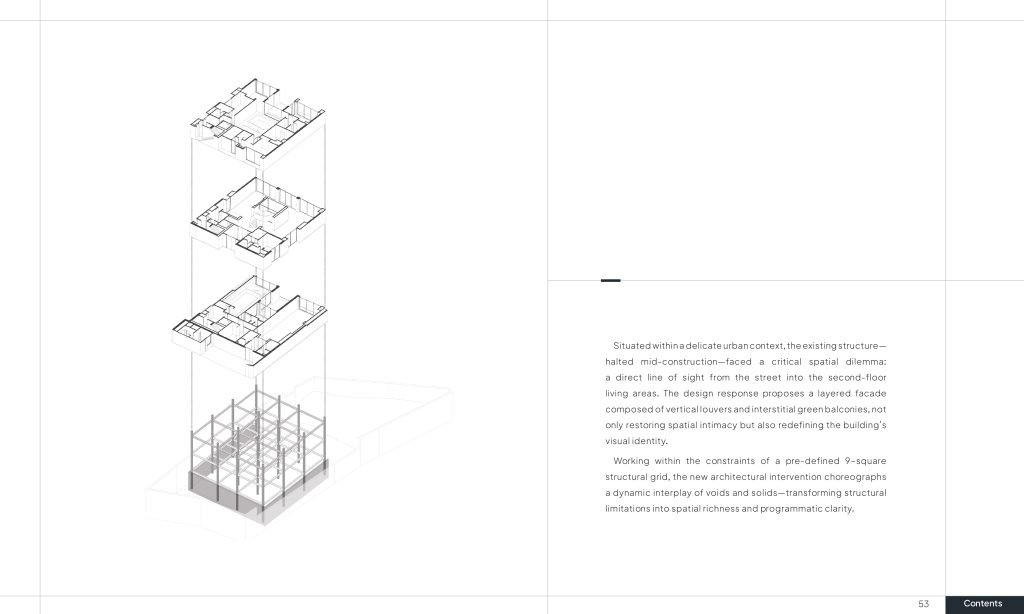
We take the opposite approach. When concrete is used, it is because concrete is the right answer structurally and spatially. When stone appears, it is because it was quarried near the site or because the climate demands its thermal mass. The material earns its place.
A wall should not pretend to be something it is not. The beauty of concrete is concrete. The beauty of stone is stone.
Three Materials, Three Conversations
Concrete: Silence and Weight
In our work, concrete is rarely decorative. It is structural, thermal, and spatial. A board-formed concrete wall in a Lavasan villa carries the imprint of its making — the grain of the timber, the joints of the formwork, the marks of a process. This is not imperfection. This is autobiography.
Concrete also performs acoustically and thermally in ways that lighter assemblies cannot match. In the hot summers and cold winters of the Tehran plateau, thermal mass is not a luxury — it is intelligence.
Stone: Memory and Place
Iranian travertine is among the finest in the world. When we use it, we are connecting a building to a geological timeline that stretches back millions of years. The stone remembers heat, pressure, and water. It carries that memory into the spaces we design, grounding them in something deeper than aesthetic preference.
Glass: Framing and Absence
Glass, in our practice, is never a default. Floor-to-ceiling glazing is not automatically progressive. We use glass to frame specific views, to control light at specific hours, and to create deliberate thresholds between interior and landscape. A window is an argument about what is worth seeing.
Honesty as Practice
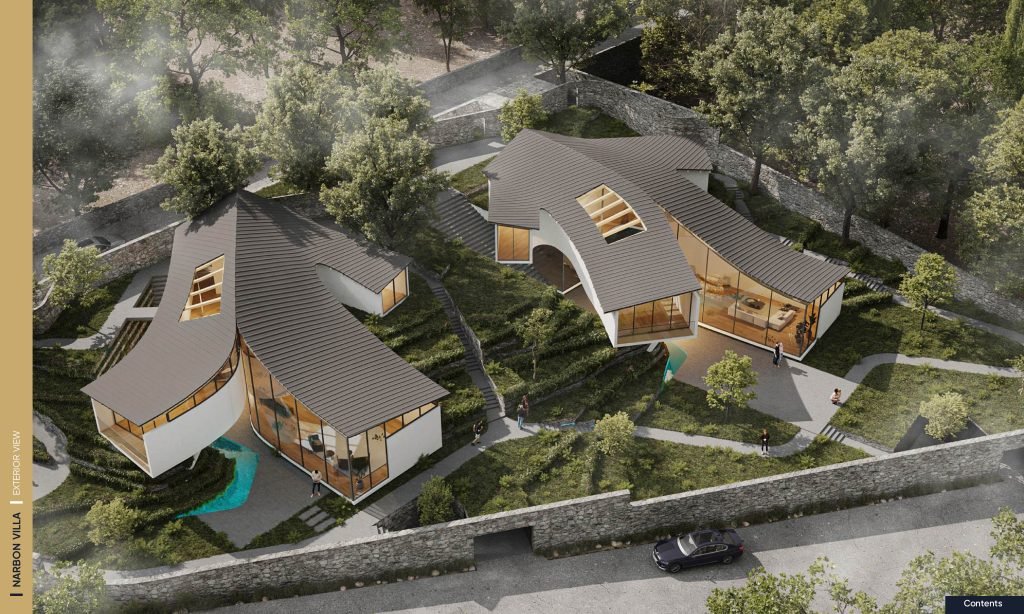
Material honesty is not a style. It is a discipline. It asks the architect to resist the temptation of surface — to work harder in the structural logic of a building so that the structure itself becomes the expression. It demands collaboration with engineers, craftspeople, and material suppliers from the earliest stages of design.
In our studio, material selection happens alongside spatial planning, not after it. The question is never “what should this look like?” but “what does this need to be?” The answer, when arrived at honestly, is usually more beautiful than anything we could have applied.
The question is never what should this look like — but what does this need to be.
This is what we mean when we speak of material honesty. Not austerity. Not minimalism for its own sake. But a deep respect for what buildings are actually made of, and the courage to let that truth be visible.