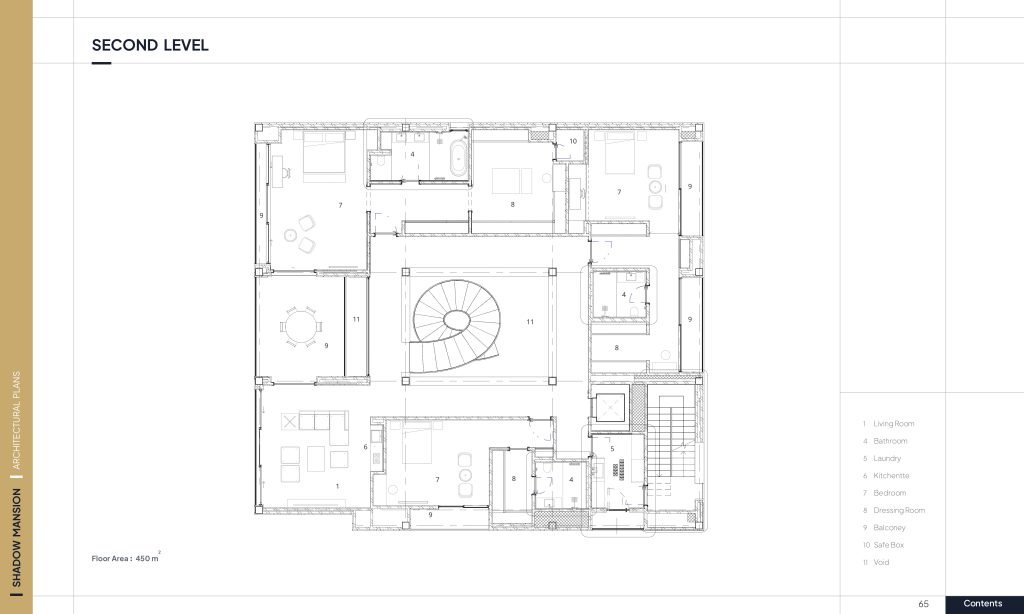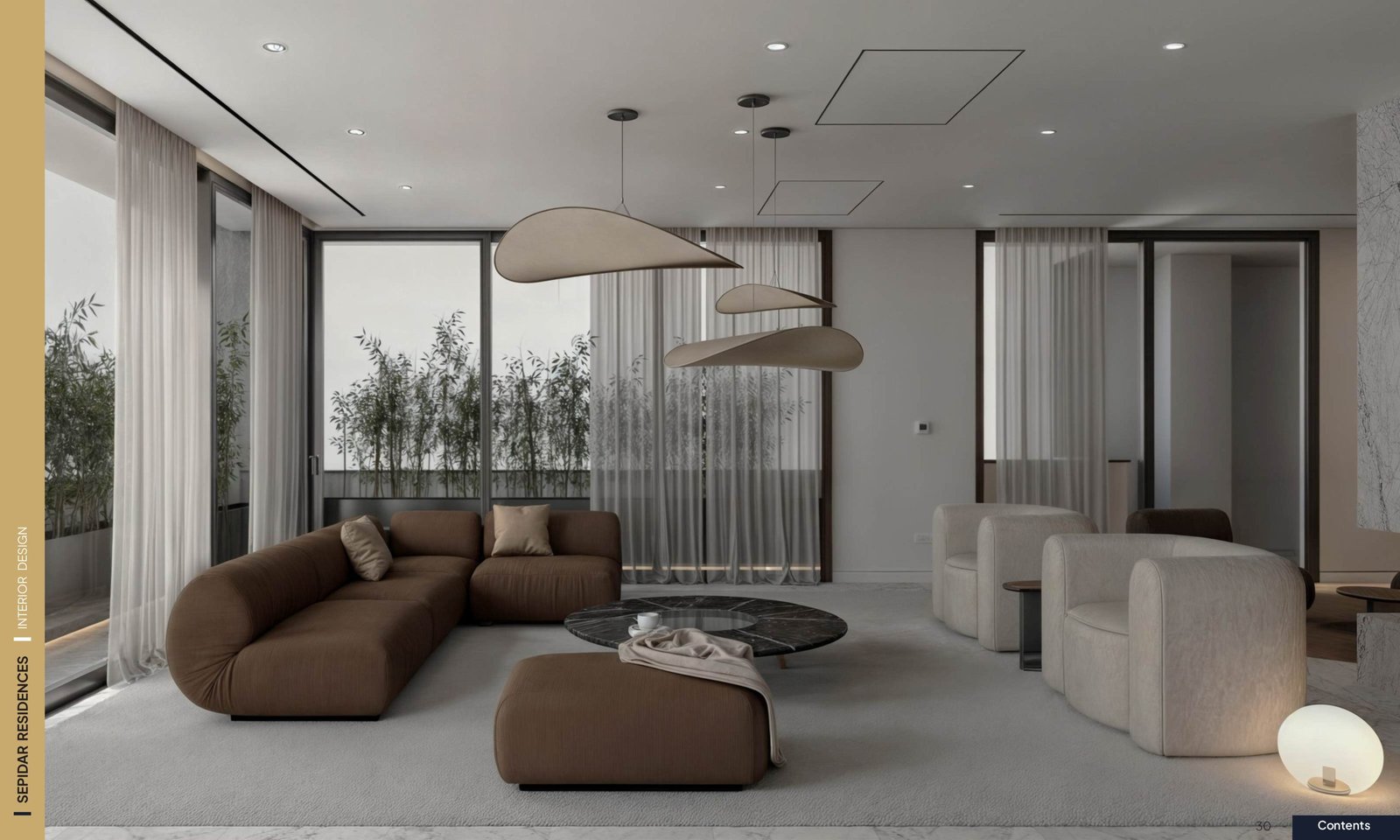
Clients frequently arrive in our studio with a program they describe as a villa. When we ask what they mean, the answers vary — a large house in the mountains, something with a pool, a project with presence. What they almost never mean is what the word implies architecturally: a building type with a specific spatial logic, a particular relationship between public and private realms, a distinct hierarchy of rooms that has been refined over centuries of European and Persian precedent.
The distinction matters. Calling a project a villa shapes expectations — for the architect, for the client, and eventually for the building itself. It implies a level of formal ambition, a concern for procession and arrival, a deliberate composition of massing that elevates the project above the merely residential. Not every large house wants to be a villa. Some should simply be a very good house.
What a Villa Actually Is
The villa, in its classical sense, is a building organized around the idea of retreat — from the city, from commerce, from the obligations of public life. It is a place of cultivation: of mind, of body, of landscape. The Roman villa rustica combined the productive farm with the contemplative garden. The Renaissance villa reinterpreted this as a stage for intellectual life. The Persian kakh and its garden compounds did something similar, organizing water, shade, and prospect into a grammar of pleasure.
What unites these precedents is intentionality of composition. A villa is not accidentally arranged. Its façade presents a face to the world with considered dignity. Its entry sequence is choreographed — you approach, you pass through a threshold, you arrive in a space that announces what the building is. The rooms are hierarchically ordered: the piano nobile has higher ceilings, better light, more elaborate detail than the floors above and below.
The Contemporary Residence
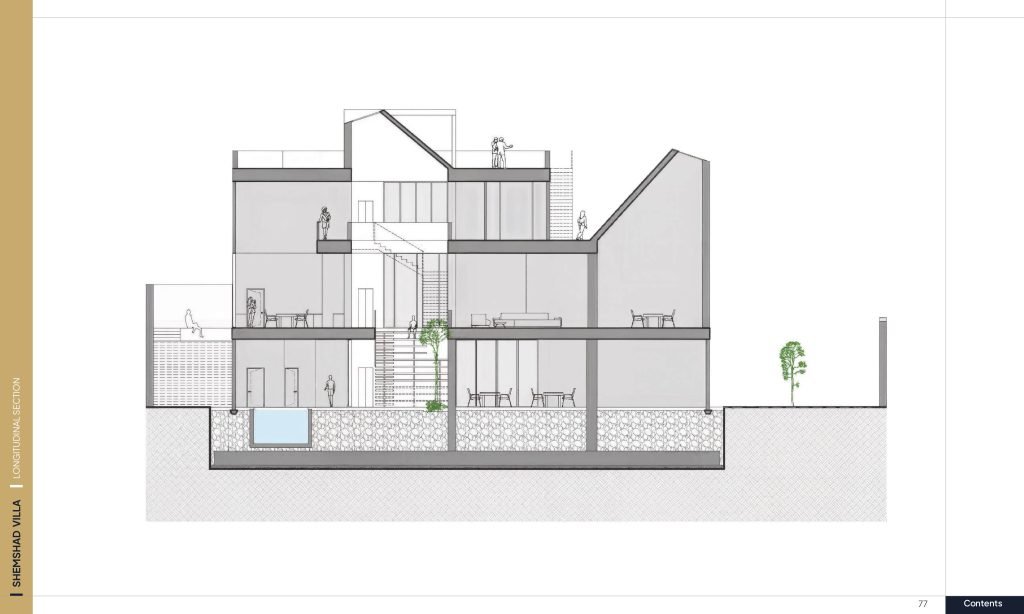
The residence — the word we use for most of the private homes we design — operates under a different set of principles. Here the organizing logic is not procession but habitation. The question is not how the building announces itself but how it accommodates the daily rhythms of a family: where breakfast happens when the morning sun is low, where children can make noise without disturbing work, how the kitchen connects to the garden so that summer evenings extend naturally outdoors.
This does not mean the residence is an inferior project. It means it asks different questions. Some of our most satisfying work has been on residences of modest scale where the program was tight and the constraints were demanding — where every square metre had to earn its place and every material decision was consequential precisely because there was no room for redundancy.
The question is not how large the building is, but how clearly it understands what it is trying to be.
Narbon as Case Study
Narbon Villa sits firmly in the villa tradition. The approach from the street passes through a gatehouse, crosses a courtyard, and arrives at the main façade from below — so the building is always seen looking upward, which gives it the dignity the program demands. Inside, a double-height entrance hall distributes movement to the principal rooms with the kind of spatial generosity that announces: this is a considered piece of architecture, not merely a large house.
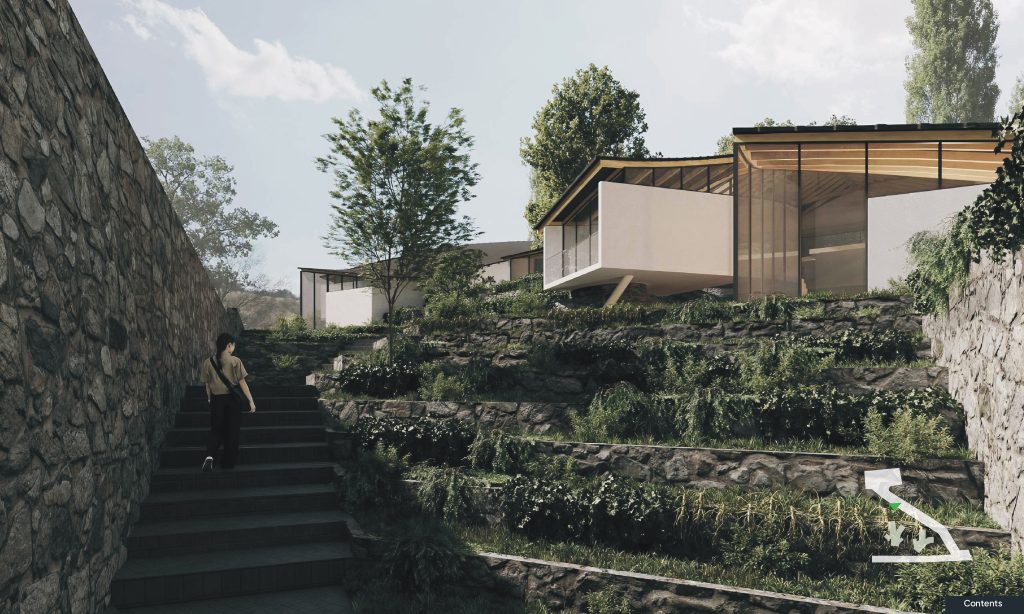
The distinction in practice comes down to a single question we ask every residential client at the start of a project: do you want a building that performs publicly — that presents itself to the world with architectural intention — or do you want a building that performs privately, that maximizes the quality of everyday life at the possible expense of formal ambition? Both are valid answers. Very few buildings succeed at doing both simultaneously. Understanding the client's honest answer to this question shapes every subsequent design decision.
There is no wrong answer. There is only the consequence of clarity — or of confusion — about what the project is trying to be from the start. The clients who struggle most during construction are rarely those with demanding programs or tight budgets. They are the ones who wanted a villa but asked for a residence, or who wanted privacy but composed a façade. Architecture cannot resolve a contradiction in the brief. It can only make the contradiction beautiful — or make it obvious.